
 Image 1 of 4
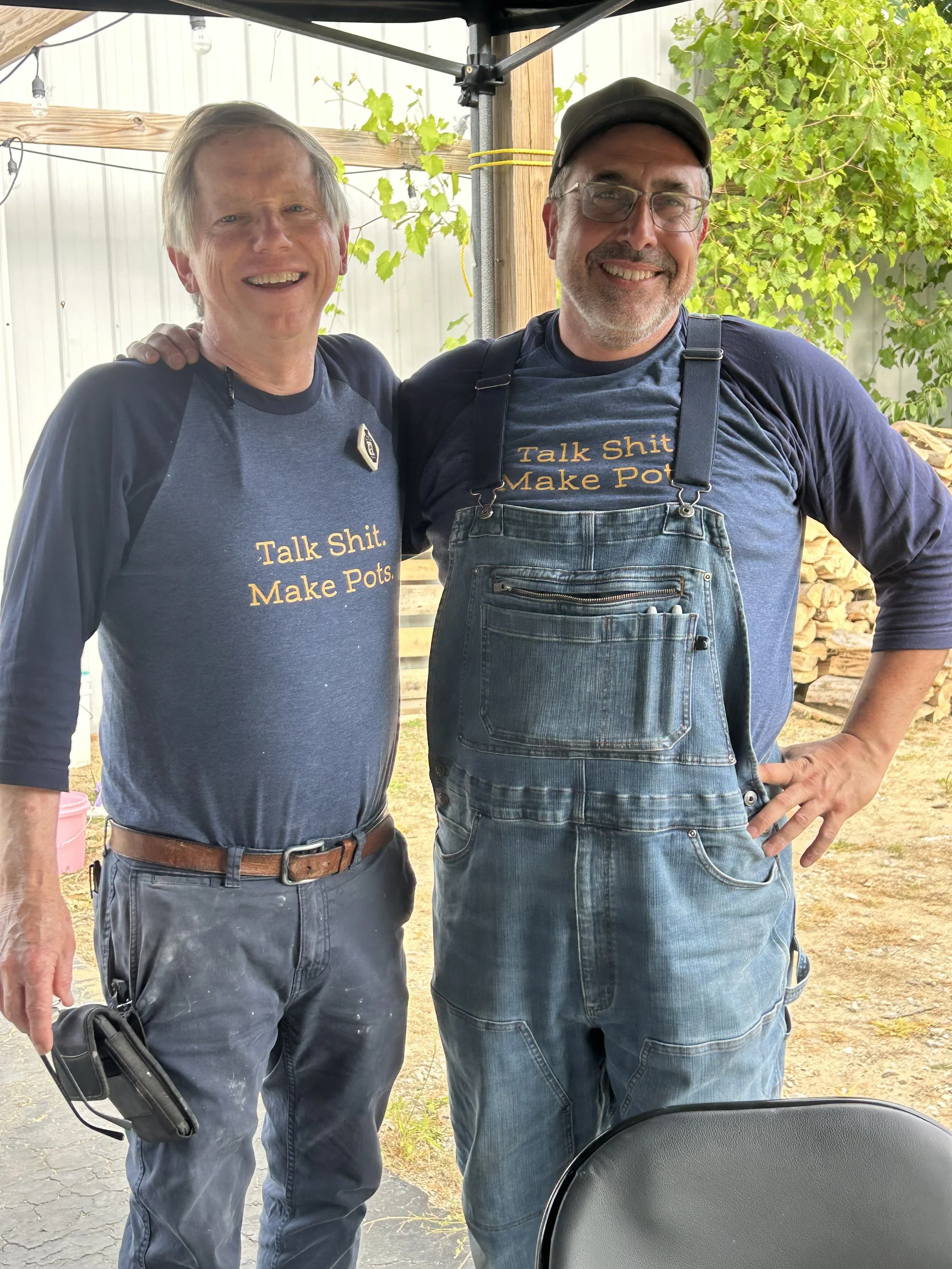 Image 2 of 4
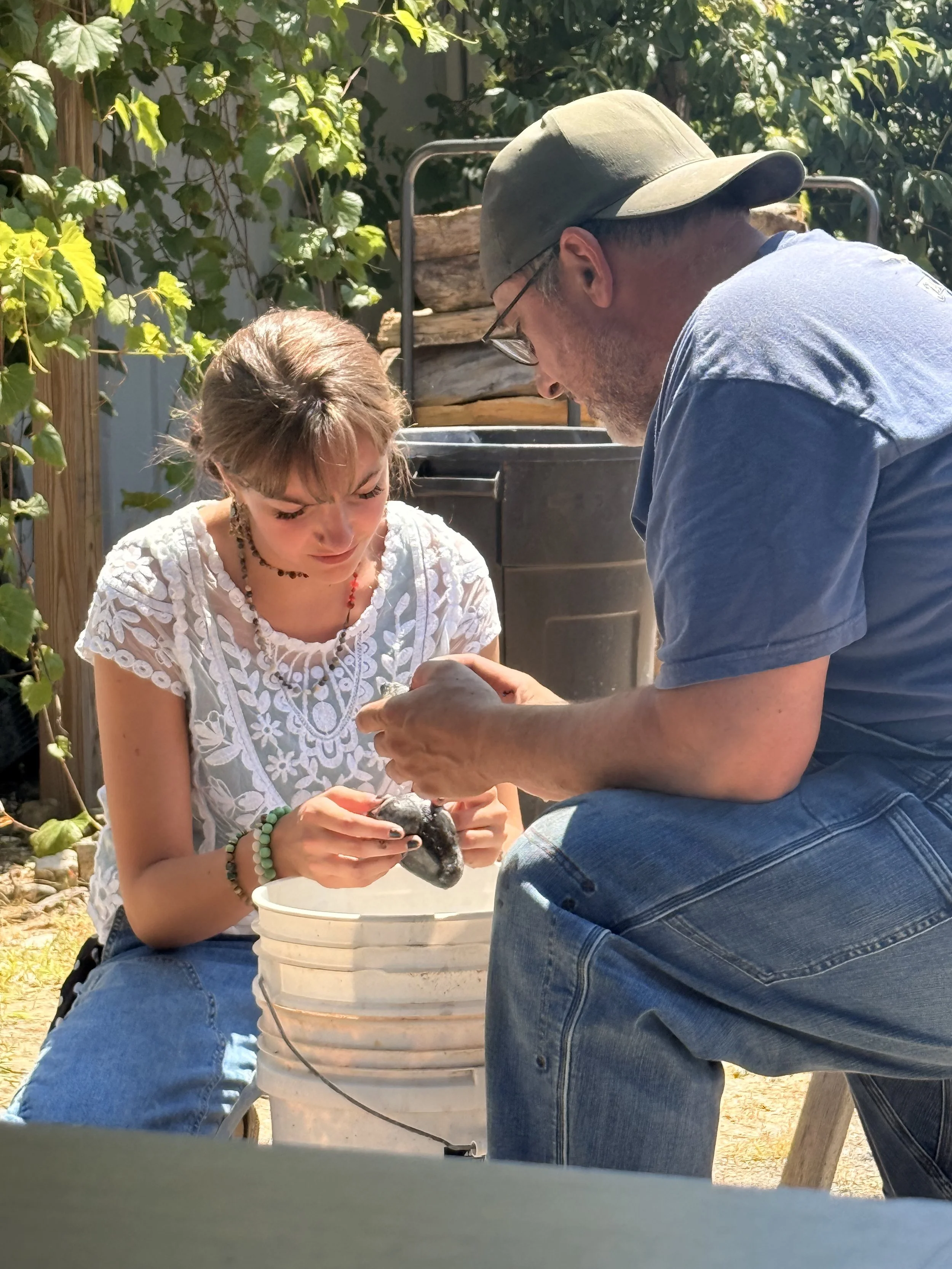 Image 3 of 4
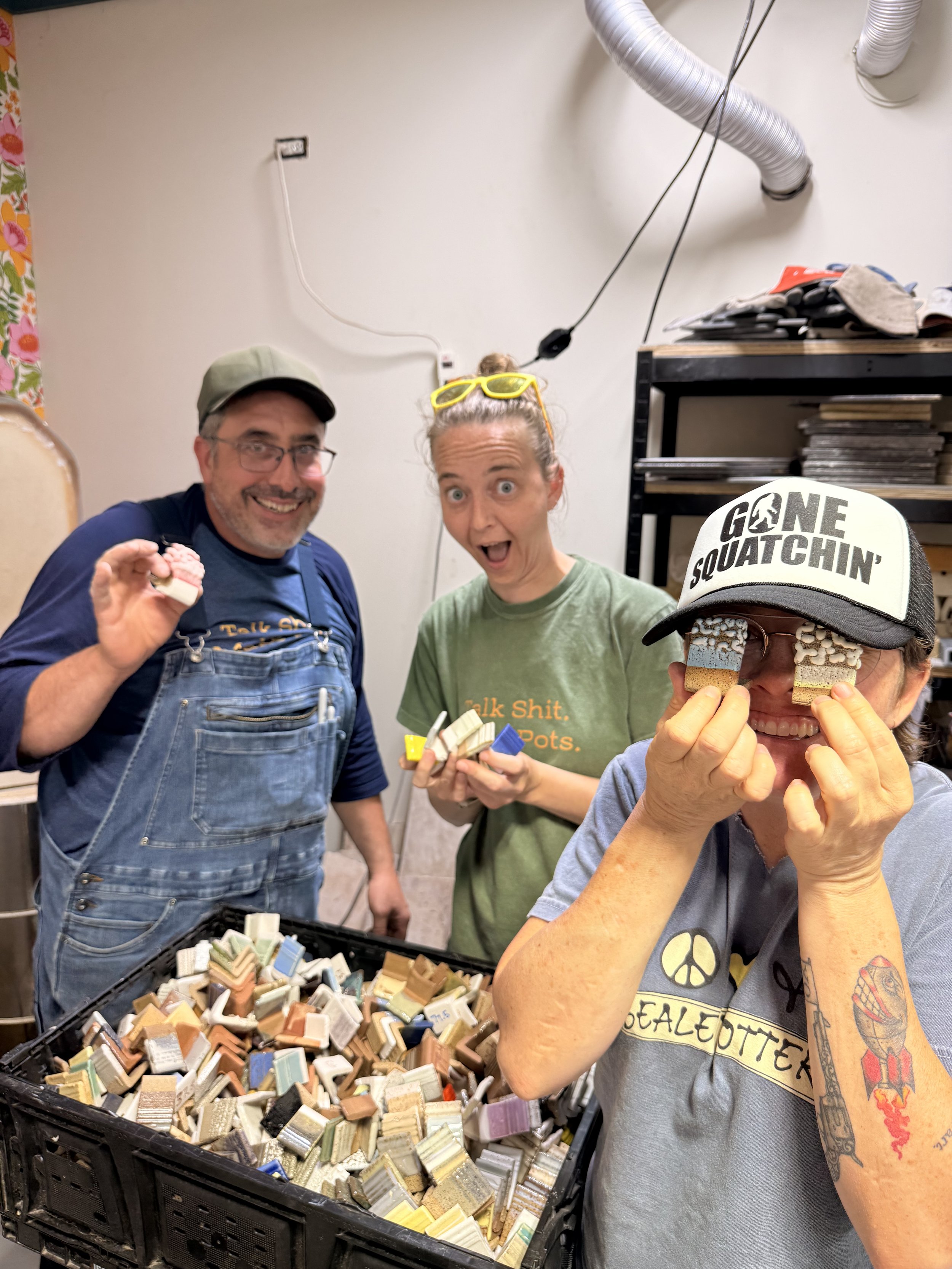 Image 4 of 4
Thursdays, January 14th - March 4th | 6 - 8:30pm
$495 per person | Minimum 6 participants - maximum 12
Get to know your glazes from the inside out!
There is so much that happens between mixing a glaze and opening the kiln. This course is an invitation to spend some time understanding that process, asking questions, and seeing what’s possible.
Eric has been making pottery for more than 30 years. Over the past several, Eric has devoted much of that curiosity to glaze chemistry. He has studied John Britt’s work and Tony Hansen’s Digitalfire resources in depth, bringing what he learns back into the studio to mix, test, fire, and try again. His ongoing work includes developing his own cone 6 no-drip crystalline glazes and exploring how firing and post-firing reduction affect their surfaces.
Eric puts a lot of time and thought into his work. He is a natural teacher, with experience guiding students from their first time at the wheel through more advanced work, as well as teaching raku and glaze formulation.
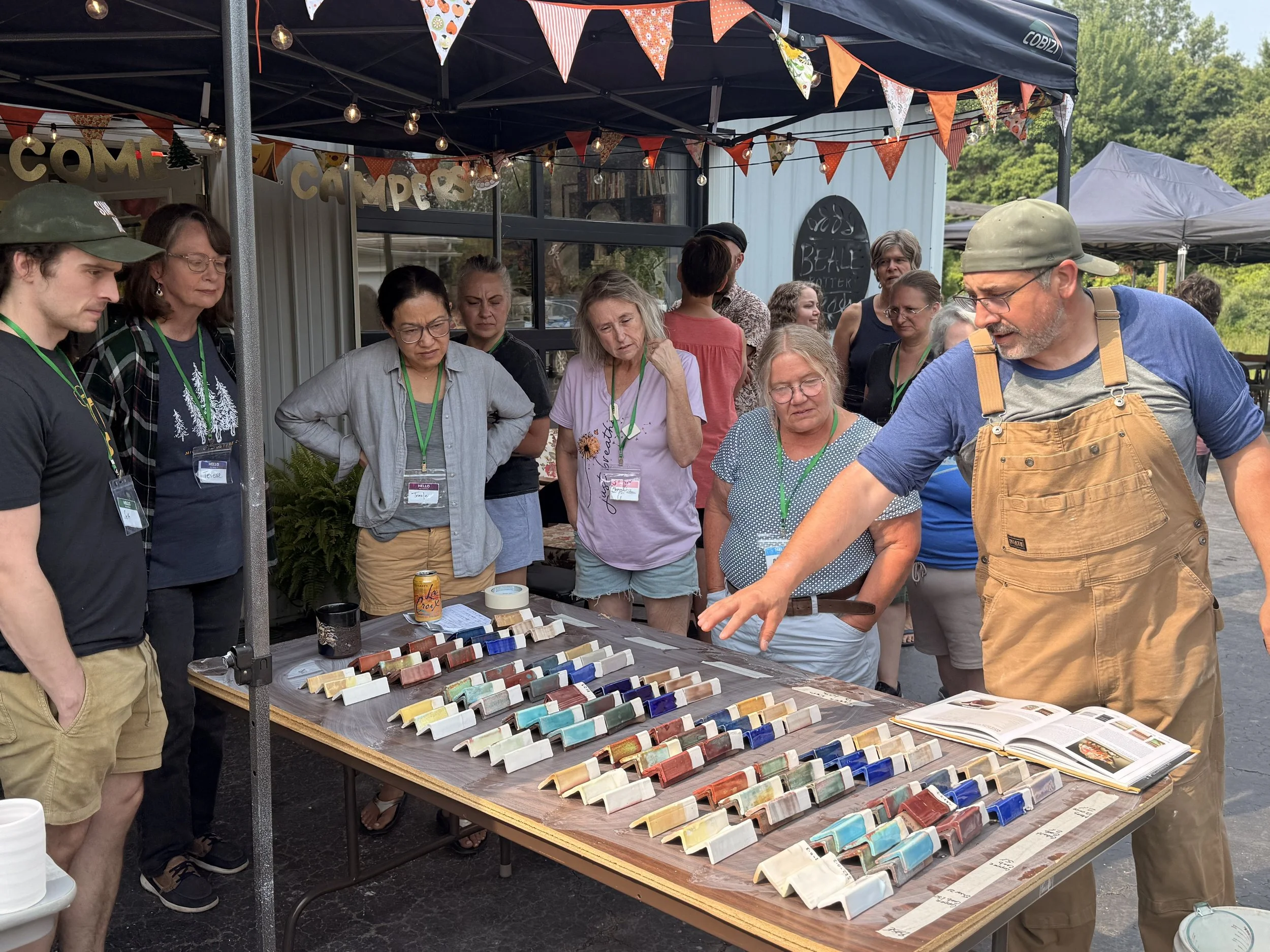
Over eight weeks, you’ll work with raw materials, learn to read glaze recipes, mix small test batches, and use line tests to explore what happens when ingredients change. You’ll look at fired results together and talk through what they tell you, including the ones that are a surprise. Each week will build on the last as you explore how glaze ingredients, clay bodies, application, and firing work together.
Glaze chemistry can feel like a lot to take in. Eric will make room for questions, demonstrations, individual guidance, and time to connect the chemistry with what you can see on a test tile. You’ll build a collection of fired samples, recipes, and notes to bring back to your own practice, along with more confidence in deciding what to try next.
If you’ve been curious about mixing your own glazes, or want to better understand the ones you already use, Eric would love to have you join him in the studio.
The Weekly Plan
Week 1 • January 14 - Foundations of Glaze Chemistry
Explore the basic components of a glaze, how to read a recipe, and the relationship between materials and fired surfaces. Introduce the Unity Molecular Formula (UMF), the Stull chart, and planning and recording useful glaze tests.
Week 2 • January 21 - Iron-Saturate Glazes
Explore iron’s role in glaze color and surface. Mix test batches and use controlled variations to investigate iron-saturated glazes.
Week 3 • January 28 - Iron Results + Chrome–Tin Glazes
Review our fired iron tests and discuss what the results reveal. Introduce chrome–tin glazes and explore how recipe chemistry influences their color response.
Week 4 • February 4 - Chrome–Tin Results + Alkaline-Earth Mattes
Examine the chrome–tin tests, then explore alkaline-earth matte glazes and the chemistry behind their surfaces.
Week 5 • February 11 - Matte Surfaces, Crawl + Lichen Glazes
Review our matte tests and explore crawl and lichen surfaces, considering how recipe and application influence texture and surface development.
Week 6 • February 18 - Behrens Satin Matte, Titanium & Celadons
Study these glaze families through mixing, testing, and discussion, exploring their differences in color, surface, and response to materials.
Week 7 • February 25 - Crystalline Glazes
Explore the chemistry and firing considerations behind crystalline surfaces, including Eric’s work developing cone 6 no-drip crystalline glazes.
Week 8 • March 4 - Glazing Your Own Work + Final Review
Bring together what we’ve learned, review fired results, and apply selected course glazes to approved personal bisqueware. Discuss how to continue testing and developing glazes independently.
*The weekly plan may be adjusted to allow for firing results and further investigation.
Raw materials for scheduled course experiments
Test tiles provided by Eric
Course test firings - students will build a collection of fired samples, recipes, and experiment records to reference in their own practice.
A binder to record notes and findings
*You may bring your own test tiles if you have a specific mid-range clay you work with.
For safety and course participation, please bring the following…
An OSHA-approved respirator or N-95 dust mask
A labeled quart-size zip bag for storing your respirator
An immersion hand blender
A triple beam or digital scale capable of weighing to 0.1 grams
Please test your scale against another accurate scale prior to the workshop, as many inexpensive models are not properly calibrated.
Students are encouraged to bring their own bisqueware for the final glazing session. Eric will discuss clay bodies, size, and quantity before pieces are glazed or fired.
Firing range for course tests and personal work: mid-range cone 5/6
Final Firing & Pickup
Work glazed during the final class will be available after firing. Students will be notified when pieces are ready and given pickup instructions.
Registration & Policies
A minimum of 6 participants is required for the course to run, with enrollment limited to 12. If Beale Pottery cancels the course because minimum enrollment is not met, registered participants will receive a full refund.
No credits or refunds after January 1st, 2027.